What Is IASTM? A Practical Guide for Active Lake Tahoe Patients
Quick Summary
- Instrument-assisted soft tissue mobilization (IASTM), sometimes called “scraping,” is a hands-on technique that uses a smooth tool to work across muscles and other soft tissues.
- It may be included in a personalized chiropractic care plan when an assessment suggests it is appropriate.
- A session can feel like focused pressure or a firm massage, and temporary redness or soreness can occur afterward.
- At Aligned Chiropractic and Wellness, we may combine IASTM with adjustments, assisted stretching, cupping, and other modalities during longer, comprehensive visits.
If you are preparing for early winter skiing and snowboarding, getting back on the mountain bike, or simply feeling the effects of an active Lake Tahoe lifestyle, you may have heard someone mention IASTM. The name sounds technical, but the idea is straightforward: it is one form of soft tissue therapy we may use to address areas that feel restricted, overworked, or slow to settle after activity.
At Aligned Chiropractic and Wellness in Stateline, Nevada, we serve patients throughout Lake Tahoe and South Lake Tahoe with longer, hands-on appointments designed around the person in front of us. IASTM is never a one-size-fits-all answer. It is one tool among many that may be considered after an individual assessment.
What Is IASTM?
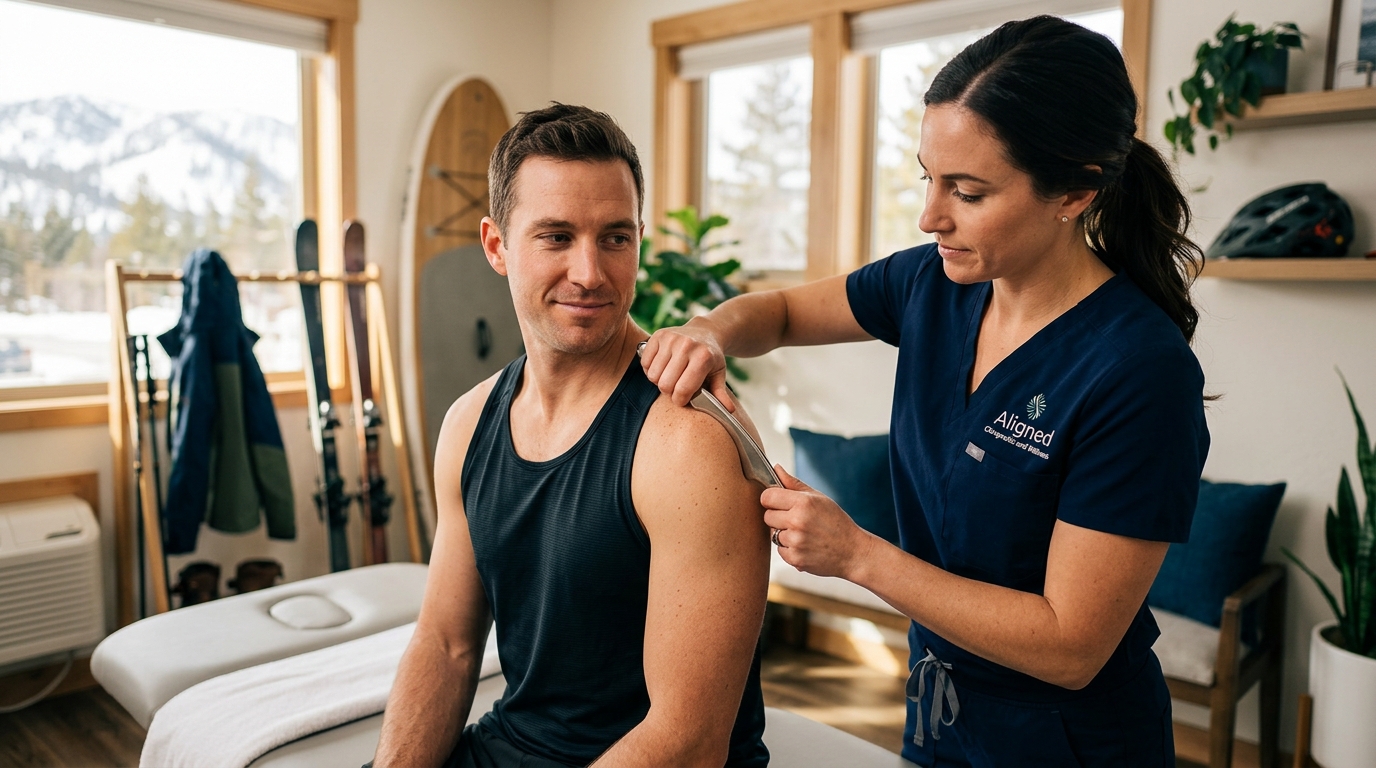
IASTM stands for instrument-assisted soft tissue mobilization. It involves using a small, smooth-edged tool to apply controlled pressure across the skin and underlying soft tissue. Some people call it “scraping,” although the goal is not to scrape away anything from the body. In particular, IASTM does not remove toxins.
Instead, the tool gives the chiropractor another way to feel and work through an area with precision. Depending on your needs, we may use it around muscles that have been working hard, areas that feel stiff with movement, or tissues affected by a recent increase in activity. The approach, pressure, and location are based on your history, movement, symptoms, and examination findings.
For a closer look at the range of techniques we may incorporate, visit our chiropractic and wellness services page.
What Might an IASTM Visit Feel Like?
During IASTM, you will usually feel steady, focused pressure as the instrument moves over a targeted area. It may feel similar to a firm massage, though the sensation can be more concentrated than broad hands-on work. Some areas may be more sensitive than others, especially when muscles have been doing extra work to support a movement pattern.
We want the treatment to be productive and tolerable, not something you simply have to push through. Communication matters. We can adjust the pressure, technique, and duration based on how you are responding in the moment.
Temporary skin redness is common because the tool creates friction and increases circulation near the surface. Some people also notice short-term tenderness, similar to how they may feel after a new workout or deeper manual therapy. Bruising is not the goal, and a stronger sensation does not automatically mean a better result. Let us know about medications, skin sensitivity, medical history, or anything else that could affect whether this technique is appropriate for you.
Why Include It in a Broader Hands-On Plan?
Our goal is not to use a modality simply because it is available. At Aligned Chiropractic and Wellness, we consider how your body is moving, what activities matter to you, and what type of care fits your preferences and assessment. IASTM may be used alongside chiropractic adjustments, massage-based soft tissue care, assisted stretching, or cupping when those options make sense for your visit.
For some patients, a hands-on approach may help them feel more comfortable moving through a specific range of motion before we add stretching or movement guidance. For others, we may decide that a different technique—or no instrument work at all—is the better choice. Our appointments typically allow 15 to 30 minutes so we can take a more comprehensive approach rather than limiting care to a quick adjustment.
When appropriate, our care may also include modalities such as laser therapy, ultrasound therapy, or electrical stimulation. You can review our pricing and modality information to learn more about available options.
Common Questions From Active Tahoe Patients
Tahoe recreation places different demands on the body throughout the year. Before early winter, we often hear from people who are building strength for ski season, returning to snowboarding, or preparing for long days on uneven terrain. We also see patients whose mountain biking or boating activities have left them feeling tight, sore, or limited in certain movements.
People commonly ask about IASTM when they are dealing with a stubborn feeling of tightness, post-activity soreness, or an area that does not feel as free-moving as usual. They may also be looking for a thoughtful plan before ramping up training volume. These are reasonable reasons to ask questions, but they are not a reason to self-diagnose. Similar sensations can have many possible causes, which is why an individual assessment is important.
We can discuss what you are noticing, how it affects your activities, and whether IASTM belongs in your care plan. Our conditions treated page offers additional context on concerns we commonly evaluate and manage through conservative care.
Realistic Expectations for IASTM
IASTM is not a magic fix, and it is not intended to replace active participation in your care. Some people notice that an area feels less guarded or easier to move after treatment. Others may need time, repeated visits, exercise guidance, activity modifications, or a different approach altogether. Results vary based on the individual, the concern being addressed, daily demands, and many other factors.
A good plan should fit your goals. If you want to prepare for the first powder day, feel more comfortable during a long ride, or move with more confidence while handling the demands of work and family, we will talk through practical next steps. That may include hands-on care, stretching, movement recommendations, or simply monitoring how your body responds.
A Personalized Approach for the Tahoe Community
As a Lake Tahoe chiropractor, we believe comprehensive care starts with listening. Your plan may look different from your training partner’s plan, even if you both have similar activity levels. What works for someone recovering from a long mountain bike ride may not be the right choice for a pregnant patient seeking gentle, Webster-certified prenatal chiropractic care or for a new parent bringing in an infant with feeding or latching concerns.
Aligned Chiropractic and Wellness offers care for a wide range of Tahoe community members, and our recommendations remain specific to each person’s assessment and goals. Whether we incorporate IASTM, cupping, assisted stretching, adjustments, or another modality, the purpose is to provide thoughtful, individualized care—not a predetermined routine.
FAQ
Is IASTM the same as scraping?
“Scraping” is a common informal name for IASTM. The technique uses a smooth instrument to apply controlled pressure to soft tissue. It is not intended to scrape away tissue or remove toxins.
Does IASTM hurt?
It can feel like focused pressure or a firm massage, and some areas may be tender. We adjust the pressure and technique based on your comfort and response. Treatment should always be a conversation, not something you have to endure silently.
Why is my skin red after IASTM?
Temporary redness can occur from friction and increased circulation near the skin’s surface. Mild soreness may also occur for a short time. We will explain what to expect based on the area treated and encourage you to tell us about any unusual or concerning response.
Can IASTM help with mountain biking or boating soreness?
IASTM may be one option we consider for active patients who feel tight or sore after mountain biking, boating, skiing preparation, or other Tahoe activities. Whether it is appropriate depends on an individual assessment, your health history, and what we find during the visit.
Will IASTM be the only treatment at my appointment?
Not necessarily. Our longer, comprehensive appointments can combine adjustments, soft tissue care, assisted stretching, cupping, and other modalities when appropriate. Your visit is tailored to your needs rather than following a standard sequence.
How do I know whether IASTM is right for me?
The best way to find out is to schedule an evaluation. We will discuss your goals, activity demands, health history, and concerns before recommending any care. If you are ready to explore a personalized approach, book an appointment online with Aligned Chiropractic and Wellness. We would be glad to help you prepare for the activities you enjoy and talk through whether IASTM may fit your care plan.